FRIDAY
2
OCTOBER
Washington's free museums are the best deal in American family travel, and two things go wrong. Free does not mean walk-in: Air and Space and the Zoo both require a pass, and the Zoo's covers infants. And most Smithsonians ban outside food, with no coat check to stash it in.
Updated September 30, 2026 · refreshed weekly
Two of the most kid-magnetic free sites require a pass before you arrive. Everything else on the list is genuinely walk-in.
The Mall's biggest draw for an aviation-obsessed child, and the one free Smithsonian that gates entry.
Free, but timed-entry passes are required for all visitors regardless of age. One person can reserve up to nine; groups of ten or more need Group Passes.
Any age, as long as you reserve the pass the moment you decide to go
Your plan was to duck out for lunch and come back — you cannot on one pass
Free, up Connecticut Avenue, and the one Smithsonian site that welcomes your own picnic.
Free, but entry passes are required for all guests, including infants.
Everyone, including the baby — who still needs a pass of their own
Every Smithsonian entrance runs a full screening, and three of the banned items live in an ordinary diaper bag. The food rules then differ museum by museum.
The Smithsonian's own guidance is to arrive when the doors open at 10am. Crowds build from around noon and peak between 2 and 4pm.
Restrooms at every Smithsonian museum and at the Zoo have baby changing tables and care spaces. Three museums publish exactly where.
The Botanic Garden is the most under-used free stop in Washington with young children. Two paid museums are worth budgeting for, mostly because their closed days catch people out.
A warm indoor garden three blocks from Federal Center SW, with a Children's Garden of hands-on watering activities — the best bad-weather room in the city.
Free, with no tickets required at all, evening programming included.
Toddlers, and any day that turns wet or cold
Purpose-built indoor play, steps from Federal Triangle and three blocks from Metro Center.
$18.95 for adults and for children age one and up; under-ones free.
Under-tens on a rainy day, if you would rather pay than queue
It is a Tuesday
Across the street from Judiciary Square, with a Great Hall big enough to stop a child mid-sentence.
$18.95 for adults and $15.95 for youth and seniors — but the Great Hall and the museum shop are free to walk into.
A genuinely good ten minutes of ceiling-gazing on a rainy day, at no cost
It is Tuesday or Wednesday — a five-day week that is easy to get wrong
Live from our catalog — 24 upcoming, refreshed weekly.

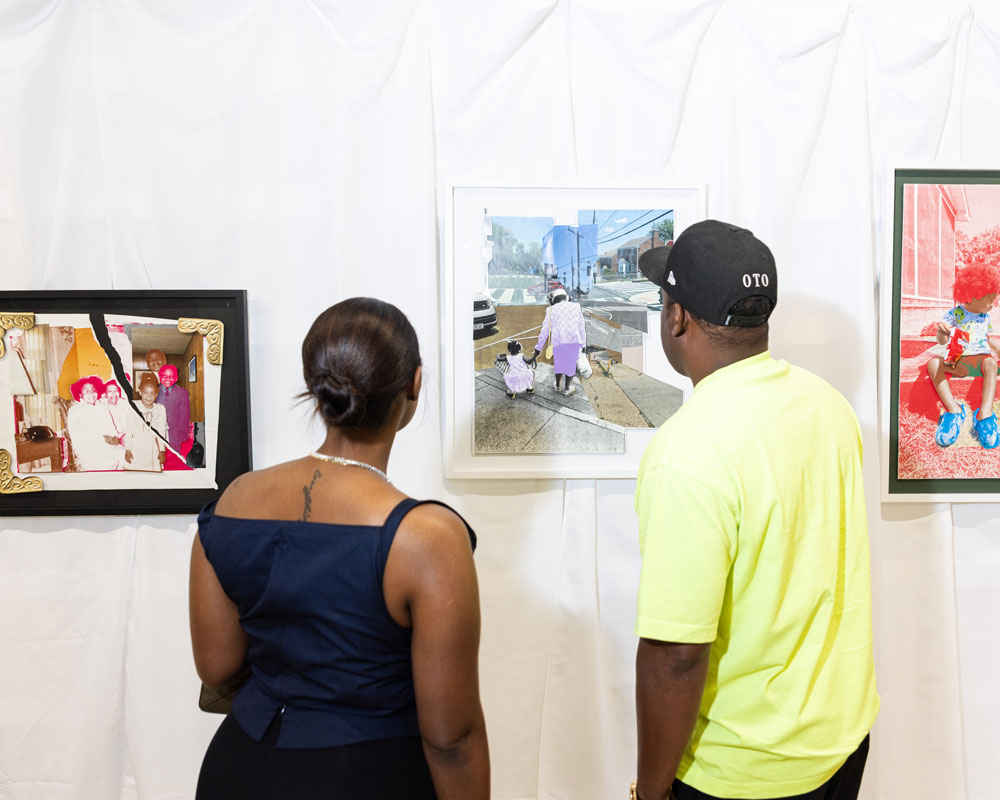
The Willow Street Gallery is open 6 to 8 pm for the closing reception of We Are The Ones This is a juried group exhibition featuring work from 18 DMV-area artists. Inspired by the final line of June Jordan’s Poem for South African Women, “We are the ones we have been waiting for,” this exhibition explores what can happ…
Children and families are invited to learn, play and create at the Portrait Gallery! Join educators every Monday as we explore a variety of topics and artistic materials. Participants will get a closer look at art with hands-on activities, music and story times. Portrait Gallery Kids is a fun way to engage with art and…

Join curator Diana Greenwold for an exclusive tour of A Museum in the Making , an exhibition that tells the story of a bold experiment in art and design that still shapes our galleries today. Artists, architects, and designers transformed museum founder Charles Lang Freer’s Detroit home to display art in new ways. Lear…
Dive into a spy thrilling presentation spanning 250 years of American espionage! Get ready for true stories packed with cloak-and-dagger adventures from the Revolutionary War all the way to the 21st century.
NMAAHC Kids at NASM PLEASE NOTE: This program takes place at the NATIONAL MUSEUM OF AIR AND SPACE ( 650 Jefferson Drive SW. Washington, DC 20560 ) and requires free timed-entry passes to enter the museum. NMAAHC Kids joins our friends at the National Air and Space Museum in DC for Flights of Fancy Story Time . Meet us…
Tell us what you like, and get a free weekly email of hand-picked local events from 100+ DMV venues:
Festivals · Kids' classes · Craft workshops · Live music
Come explore contemporary art galleries, artist studios, pottery, and more. — Join us for our first Second Saturday Event at Canal Square. Come explore contemporary art galleries, artist studios, pottery, and more. This event will take place the second Saturday of every month through November.
For the first time ever, an exceptional selection of masterpieces is crossing the Atlantic and coming to the United States. In From the Louvre: Masterpieces of Islamic Art , you can admire remarkable artworks created between the seventh and nineteenth centuries from a vast geographic area that extends from Spain to Ind…
Please join Robyn Asleson, Curator of Prints and Drawings, for a tour of two additions to the museum’s “ Out of Many: Portraits from 1600 to 1900” exhibition: a freshly conserved diorama depicting the signers of the Declaration of Independence, and a new Revolutionary War–era gallery titled “Independence: 1770–1783.”
Could you be a postal clerk? In this activity, a volunteer challenges you to sort mail, deciding which letters will be delivered and which would be sent to the Dead Letter Office. Complete the challenge and leave with a prize!
Join us in the galleries for a series of drawing workshops with artist, Jill Galloway! Each month, Jill will guide participants through a step by step sketching lesson. Learn new sketching techniques while drawing inspiration from the Portrait Gallery's collection. These workshops will include all supplies. Open to art…
Is the 21 st Century the real Age of Dinosaurs? Today, more paleontologists are discovering more dinosaur fossils from more places in the world than ever before. Our understanding of these amazing creatures has leapt forward while their popularity has surged. Museums sit at the junction of these phenomena. The Smithson…
Save the date for some fossil fun on Wednesday, October 14th! Celebrate National Fossil Day with real fossils and free, family-friendly activities in the museum’s Hall of Fossils – Deep Time ! Scientists and educators from the Smithsonian will be on hand to welcome families and anyone interested in exploring Earth’s de…
John P. Jacob , the McEvoy Family Senior Curator for Photography, and Krystle Stricklin , assistant curator of photography, will take attendees on a tour through the exhibition Much Here Is Beautiful: Photography Surveys of the U.S. Bicentennial . Questions are allowed throughout the tour, and stools will be provided f…
G. Wayne Clough , geotechnical engineer and Smithsonian secretary emeritus, shares the latest research and personal stories about how nature has transformed the Georgia coast across millions of years and how human impact continues to shape its future. Join us at the National Museum of Natural History for a conversation…
Join curator Carol Huh for a tour of Saodat Ismailova: Melted into the Sun . This exhibition presents film and installation artist Saodat Ismailova’s work, grounded in Central Asia’s complex histories and ancient myths. Weaving together her own footage, rare archival film, and text, she evokes a vivid sense of place an…
On this extra special tour with the Postal Museum’s Director or Deputy Director, explore the wonders of our museum like never before! Meet at the Information Desk for an exclusive 45-minute tour.
Curious about American art? Join us for a 30-minute in-person conversation about selected works from the Smithsonian American Art Museum’s collection. This program is presented in American Sign Language (ASL) with voice interpretation for hearing participants. Image credit: Photo by Mary Tait
Join SAAM’s research fellows for this lunchtime series of gallery talks, each focused on one compelling artwork. Discover the stories behind these objects and the insights they offer into the United States’ ever-evolving cultural landscape. Homer Arnold , George Gurney Predoctoral Fellow, discusses Martha Rosler ’s Sem…
Learn more about your place in the world through explorations of nature and culture with museum educators and our friends from WETA! Join us on Saturday, October 24, for a special African safari adventure with our friends from WETA PBS Kids, the Smithsonian's National Zoo, and a special guest—Elmo! Explore the animals…

October and November are magical in the Enid A. Haupt Garden. Sketch in this stunning garden using watercolors to capture the changing light of the season.
Join the Portrait Gallery Reading Rhythms for a reading party designed to make it easy for people to gather and read socially.
In-person Family Program: Salute the country’s 250th birthday by taking an all-American road trip at the American History Museum . Unfold your map, turn on the engine, and follow the road through the museum’s galleries in a memorable overnight adventure. Geared for children ages 8 to 14 years old, accompanied by an adu…
NMAAHC Kids at the National Postal Museum PLEASE NOTE: This program takes place at the National Postal Museum located at 2 Massachusetts Ave NE. Step into a world of spooky stamps, silly surprises, and creative Halloween fun as we join our friends for a festival at the National Postal Museum ! Families can explore hand…
Tell us what you like, and get a free weekly email of hand-picked local events from 100+ DMV venues:
Festivals · Kids' classes · Craft workshops · Live music
About a minute. No payment required.
Choose ages, interests, and nearby cities.
Fifteen event picks for you.
Browse the complete local catalog anytime.
Yes — admission to every Smithsonian museum and the National Zoo is free. Free is not the same as walk-in, though: Air and Space requires a timed pass for every visitor, and the Zoo requires an entry pass for every guest, infants included.
One, properly, before noon. Spend the afternoon outdoors at the monuments rather than starting a second: crowds peak between 2 and 4pm, and there is nowhere to leave coats or bags while you tour.
Bring it and plan to eat outdoors. Most Smithsonians ban outside food; the Mall needs no picnic permit for a family, the Zoo welcomes your own food and snacks, and the American Art Museum's Kogod Courtyard is the one indoor exception.
The National Building Museum opens Thursday through Monday only, and the National Children's Museum closes Tuesdays. Both are standard rainy-day recommendations and both will burn a family that shows up midweek. The Smithsonians open daily and close only December 25.